Horizontal Wedding Cakes: The New Alternative to Tiered Cakes?
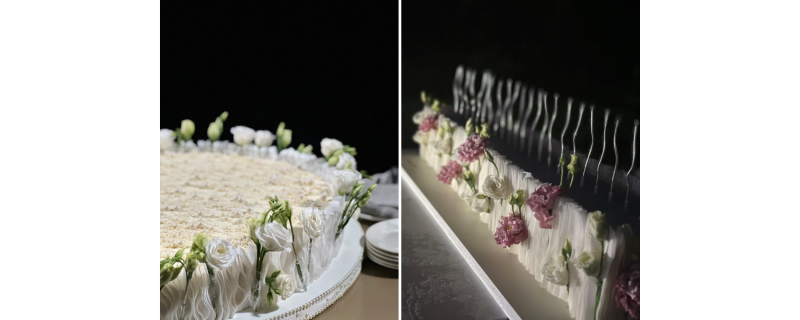
If you’re currently scrolling through Pinterest while planning your wedding, you might notice a quiet but undeniable shift: wedding cakes are no longer always tall, stacked, and traditional. Instead, a new silhouette is emerging—the horizontal wedding cake.
I often get asked if this new style could actually replace the classic tiered cake. While the tiered cake remains a beautiful staple, the horizontal approach offers a modern, editorial alternative that is redefining how we think about the “cake cutting” moment.
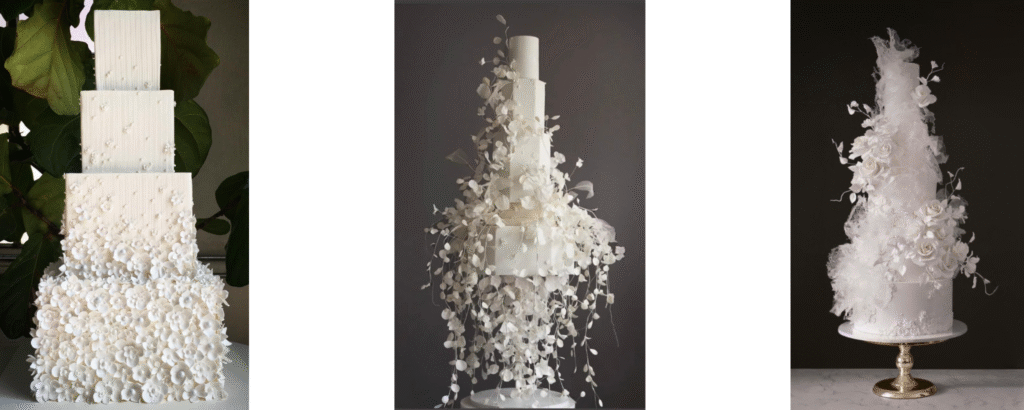
The Classic: The Tiered Wedding Cake
Most of my couples are familiar with the tiered cake; it is the timeless, formal standard. It is defined by its vertical elegance, typically featuring two to four stacked layers that act as a central focal point for the reception. If you are dreaming of a formal, high-impact centerpiece, the tiered cake is still your best friend.
The Modern Muse: The Horizontal Wedding Cake
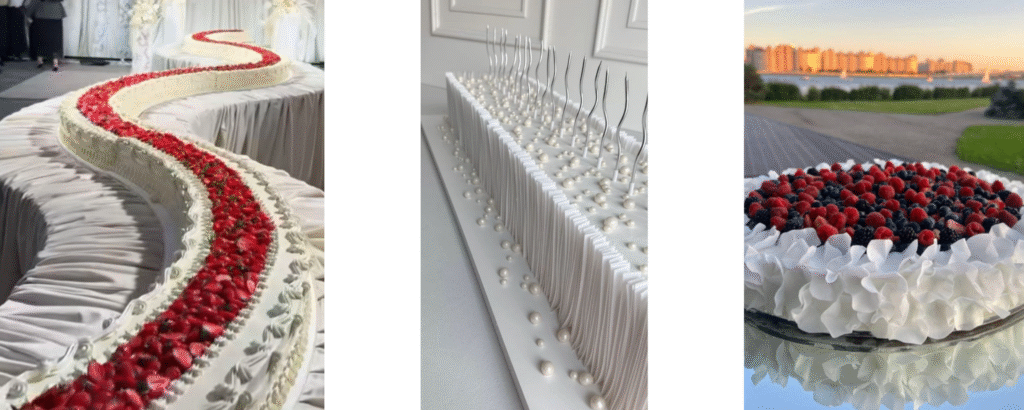
A horizontal cake flips the traditional vertical idea on its head. Instead of stacking upward, it spreads outward. In my studio, I see this manifesting in a few ways:
The Long Rectangular Cake: A single, sleek, low-profile cake that spans across the table.
Side-by-Side Composition: Multiple cakes of varying sizes placed together to create a landscape of sweets.
Flat Layering: Think Mille-feuille or “naked” tarts that prioritize texture and length over height.
For me, the focus here isn’t on height—it’s about composition and styling.
Why I’m Seeing This Trend Everywhere
There are three reasons I believe horizontal cakes are becoming a 2026 favorite:
They are highly editorial: These cakes photograph beautifully from above and integrate seamlessly into a curated tablescape.
They suit modern themes: I find they perfectly complement minimalist, garden, or European-inspired celebrations.
They embrace color and texture: Because the surface area is spread out, I can mix colors, add fresh fruits, and weave in florals to create a full palette experience.
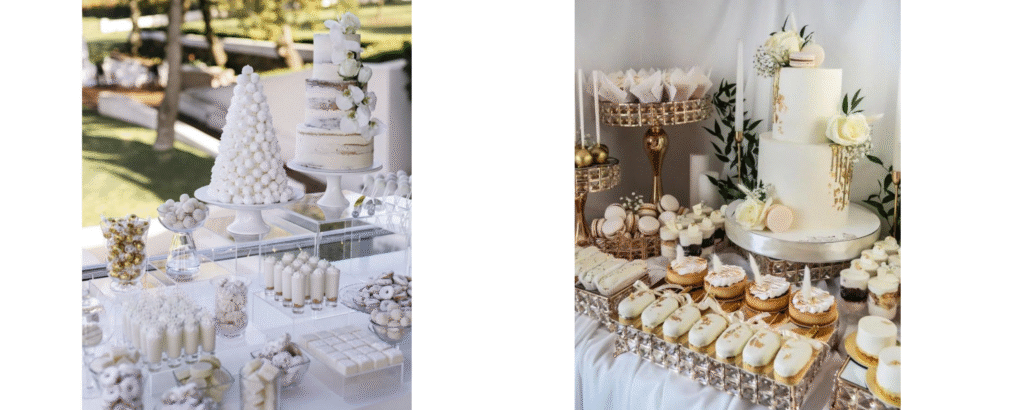
The Dessert Table Hybrid
If you want to take the horizontal concept a step further, I suggest the Dessert Table Hybrid. Instead of a single cake, we create a full dessert experience. This usually includes a small cake for the traditional cutting ceremony, surrounded by a cohesive display of cupcakes, macarons, or pastries.
Which Style Fits Your Vision?
Choose a Tiered Cake if:
You want a classic, timeless look.
You love a strong, traditional centerpiece.
Your venue is formal or grand in scale.
Choose a Horizontal Cake if:
You prefer a modern, editorial style.
You want your cake to blend into your overall tablescape rather than standing apart.
You love a Pinterest-inspired, contemporary aesthetic.
Choose a Dessert Hybrid if:
You want to offer variety to your guests.
You love the look of a fully styled, cohesive dessert display.
You want both beauty and flexibility.
My Stylist’s Tips for a Modern Setup
Regardless of the shape you choose, the styling is what makes the difference.
Color Harmony: I always match the cake tones to our wider wedding palette.
Textural Details: I love adding fresh florals or seasonal fruits to create depth.
The Table Foundation: Don’t forget the table itself—high-quality linens, candles, and intentional signage are essential.
The Balance: I aim for a rhythm between bold accents and neutral tones to keep the look sophisticated.
Final Thoughts
I don’t believe horizontal cakes are “replacing” tiered cakes, but they are certainly redefining the possibilities. Instead of just being a tall centerpiece, the cake is becoming part of a larger, more intentional visual story. And for me, that is exactly what modern wedding styling is all about.