The Rise of Amaranth: Why This Sculptural Bloom is the "It" Flower for 2026 Weddings
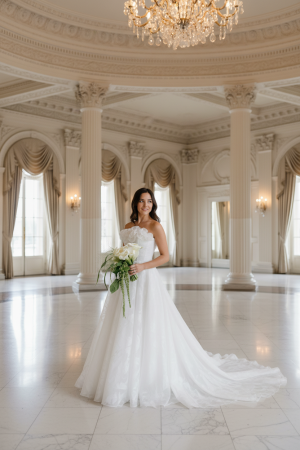
If you’ve noticed that wedding florals are feeling a little more ‘wild’ lately, you aren’t imagining it. We are moving away from the rigid symmetry of the past and leaning into arrangements that feel organic, expressive, and emotionally rich. Leading this shift is a bloom that is quickly becoming the defining feature of the 2026 season: Amaranth.
Even for those who usually prefer a more traditional flower, there is no denying the impact of its dramatic cascading form and sculptural presence. Amaranth brings a sense of movement that most flowers simply can’t match—it’s not just a filler; it’s a statement. It provides that sense of ‘quiet drama’ that modern couples are looking for, making it one of the most distinctive and sought-after trends for the upcoming year.
What is Amaranth (and Why is it Everywhere?)
If you aren’t familiar with the name, you’ve definitely seen the shape. Amaranth is best known for its long, trailing stems—often described as ‘dripping’ or ‘draped.’ Unlike traditional blooms that stand tall and upright, amaranth falls softly, creating a sense of gravity and depth that feels very ‘fine art.’
To be completely honest, amaranth is a bit of a ‘love it or hate it’ bloom in the design world. It’s a polarizing flower because it’s so distinct. But regardless of personal preference, there is no denying its impact in 2026. In wedding design, it’s highly valued for:
Its Sculptural, Editorial Look: It feels more like a piece of art than a standard flower.
Clean Texture: It adds visual interest and ‘weight’ to an arrangement without making it look cluttered or messy.
Effortless Motion: It brings a natural sense of flow to bouquets and installations that feels completely unforced.
Whether it’s used as a subtle supporting element or the main statement feature, amaranth is the go-to for couples who want their florals to feel like a living installation.
Why Amaranth is the Definitive Choice for 2026
So, why are we seeing such a massive surge in interest for this particular bloom? I believe it comes down to a fundamental shift in how we’re designing weddings for 2026. We are moving away from the ‘standard’ and into the ‘expressive.’
A Shift Toward Organic Emotion Modern couples are choosing florals that feel like a feeling rather than just a decoration. There is something deeply emotional about the way amaranth behaves—it’s imperfect, flowing, and expressive. It doesn’t follow the rules of a traditional bouquet, and that’s exactly why it resonates. It feels alive.
Prioritizing Texture Over Volume In the past, luxury was often measured by how much you could fit into an arrangement. For 2026, the luxury is in the shape. We’re seeing a move away from dense, heavy clusters and a lean toward minimal compositions that focus on texture. Amaranth is the ultimate tool for this; even a few single stems can add a layer of visual interest that a dozen roses simply can’t achieve.
The Editorial & Fashion Influence We can’t ignore the high-fashion influence here. Amaranth has been a staple in fashion editorials and high-end event styling for a while now, and that ‘curated yet natural’ look has finally found its way to the wedding aisle. It’s for the bride who wants her day to feel like a living piece of art—something that feels high-fashion but remains deeply connected to nature.
How to Style Amaranth in Wedding Florals
In wedding florals, styling amaranth is an art of balance. While it is a standout “it” flower for 2026, it works best when its unique, flowing nature is embraced rather than fought.
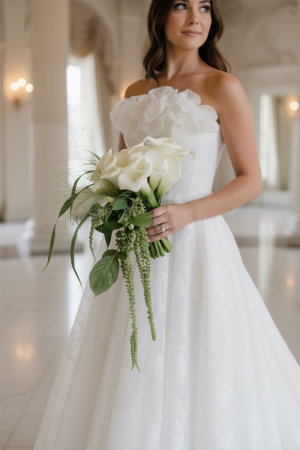
Bouquets
Amaranth adds immediate softness and movement when allowed to trail naturally. For 2026, couples are moving away from rigid, cookie-cutter looks in favor of these more sculptural, cascading silhouettes.
Best paired with neutral or muted blooms: To maintain a modern, sophisticated look, pair amaranth with clean, simple flowers. It works beautifully with classic roses, peonies, or sleek calla lilies, allowing its unique texture to stand out without competing with too many “star” flowers.
Avoid cutting it too short: The length is part of its beauty. Long, trailing tassels create a “waterfall” or “shower” effect that provides a sense of luxury and motion that traditional flowers can’t achieve.
A relaxed yet intentional look: This style is ideal for brides who want their flowers to feel “just-picked” and organic, yet carefully curated for a high-fashion, editorial aesthetic.
Ceremony Installations
Amaranth truly shines when used in larger-scale designs, where its “it-flower” status for 2026 is most visible. Its ability to provide instant drama and structural balance—without making an arrangement feel heavy—makes it a designer favorite for ceremony spaces.
Arches: Drape amaranthus along a ceremony arch or pergola to create a stunning, high-impact backdrop. The trailing strands soften structured metal or wood frames, adding a romantic “enchanted garden” feel to the ceremony.
Hanging Installations: For an immersive experience, amaranth is often suspended from ceilings in “floral clouds” or oversized bar installations. These gravity-defying creations double as both art and atmosphere, providing a futuristic, art-forward aesthetic.
Grounded Floral Arrangements: In 2026, the “meadow-style” look is trending, featuring free-form arrangements that appear to grow naturally from the ground. Amaranth adds unexpected depth and texture to these aisle meadows, grounding sculptural pieces and guiding the guest’s eye through the space.
Its unique draping quality allows for a luxe, voluminous look that still feels light and airy—perfect for modern, minimalist weddings that prioritize shape over sheer bulk.
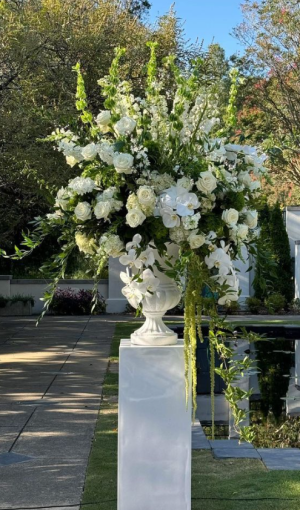
Table Arrangements
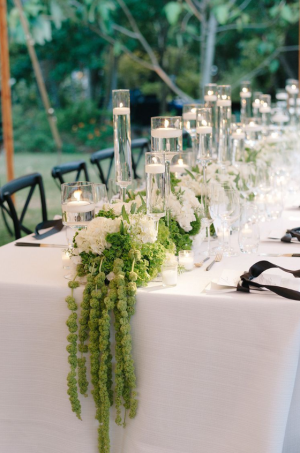
Rather than traditional tall centerpieces that can block conversation, amaranth is the perfect tool for creating designs that are visually interesting while remaining intimate and functional. Its ability to “anchor” an arrangement without making it feel heavy allows for a high-end tablescape that feels curated and intentional.
Low Arrangements: Use amaranth in low, artful compositions to add unexpected dimension. It creates a “spilling” effect that draws the eye across the table, adding a layer of sophisticated movement.
Table Runners: Amaranth is incredible for creating low, flowing table runners that appear to “grow” along the center of the table. Because it can adapt to nearly any palette, it’s an effortless way to tie your floral story into your linen and place setting choices.
Soft Cascading Accents: For a truly editorial look, let amaranth cascade over the edge of the table or spill out from a low vessel. This creates a sense of “quiet drama” that feels alive and unscripted rather than overly manicured.
Amaranth Color Palette Pairings
The true magic of amaranth lies in its versatility. Because it comes in shades ranging from deep, velvety bordeaux to pale, architectural greens, it can adapt to almost any 2026 design story. Here is how I recommend pairing it to stay ahead of the trends:
Amaranth + Smoky Jade: This is a quintessentially modern, editorial combination. The muted, cool tones of Smoky Jade provide a sophisticated balance to amaranth’s organic richness, creating a sense of depth that feels high-end without overpowering the venue.
Amaranth + Cloud Dancer: For a look that feels lighter and more ethereal, pair the bloom with soft, crisp white tones like Cloud Dancer. This creates a striking visual contrast while maintaining a sense of softness and timeless elegance.
Amaranth + Burgundy or Wine: This is for the couple who embraces drama. Pairing amaranth with deep wine tones feels incredibly romantic and is ideal for evening weddings or grand, formal spaces. My advice here? Use restraint with your other decor to keep the look refined rather than heavy.
Amaranth + Soft Neutrals: If you want a look that is airy and classic, ivory, stone, and warm beige are your best friends. These neutrals allow the sculptural form of the amaranth to take center stage, creating a grounded and relaxed atmosphere.
When Amaranth Works Best (and When It Doesn’t)
As much as I love the “quiet drama” of this bloom, it isn’t a one-size-fits-all solution. Amaranth is most beautiful when it has room to move and breathe. To decide if it’s right for your day, consider these factors:
Best For:
Modern, Editorial, or Romantic Weddings: If your aesthetic leans toward the “living art” look, amaranth is your perfect match.
Venues with Thoughtful Lighting: Because amaranth creates depth and shadows, it looks its best in well-lit spaces or venues styled with intentional candlelight.
Couples Who Appreciate Organic Design: It’s for the couple who embraces imperfection and wants their florals to feel alive rather than manicured.
Less Ideal For:
Ultra-Minimal, Stark White Weddings: In a space that is incredibly clinical or sharp, the organic “dripping” texture can sometimes feel out of place unless used very sparingly.
Very Small Venues: In tight quarters, the long, trailing movement can feel overwhelming or physically get in the way of guests.
Themes That Rely on Structured Symmetry: If you love perfect spheres and mirrored arrangements, amaranth’s wild, expressive nature might feel too “rebellious” for your design.
Pro-Tip:
If you love the movement of Amaranth but want a more understated look, ask your florist for ‘Bleached’ or ‘Dried’ amaranth. It keeps that incredible sculptural shape but softens the color to a pale cream or sand tone. It looks breathtaking when paired with the Earthy & Sun-Drenched palettes we’ve been seeing for 2026 (like the terracotta and warm beige tones.